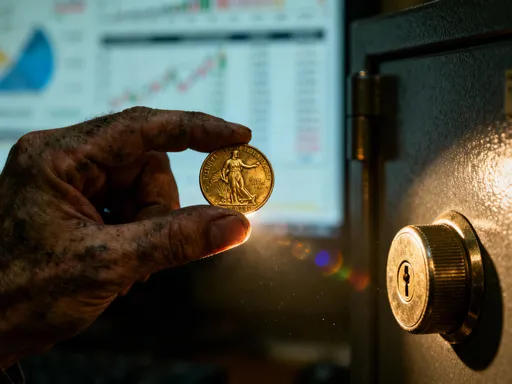
Coins in My Pocket, Holes in My Portfolio
You’d think collecting rare coins would be a safe bet—tangible, historical, maybe even nostalgic. I did too. But what started as a passion slowly turned into a financial blind spot. While I focused on rarity and condition, I overlooked liquidity, market swings, and hidden costs. This isn’t just about coins; it’s about how seemingly smart additions to your investment portfolio can backfire if you’re not careful. Let’s talk about the real story behind coin collecting as an investment—and what I wish I’d known earlier.
The Allure of Coin Collecting: More Than Just Pocket Change
Coin collecting has long captivated investors who seek something more tangible than digital stock tickers or abstract mutual fund shares. There’s an undeniable charm in holding a piece of history—whether it’s a Morgan silver dollar from 1904 or a gold sovereign from the British Empire. These coins carry stories, craftsmanship, and a sense of permanence that paper assets often lack. For many, especially those wary of volatile markets or complex financial instruments, coins represent a simpler, more grounded form of wealth. They can be stored at home, shown to family, even passed down through generations. This emotional connection often strengthens the belief that coins are not only valuable but inherently stable.
Yet this sense of security is often misplaced. While some rare coins have appreciated significantly over time, the majority do not deliver strong returns. The market for collectible coins is highly specialized and driven primarily by supply and demand among collectors, not broader economic indicators like inflation, interest rates, or corporate earnings. As a result, price movements can be erratic and unpredictable. A coin that sells for $5,000 today might struggle to find a buyer at $3,000 two years later, depending on shifting tastes or economic conditions. Unlike stocks or bonds, which are traded on regulated exchanges with transparent pricing, the coin market operates largely in private networks, auctions, and dealer shops, where information asymmetry is common.
Another critical factor is the lack of standardization. Two coins that appear identical may differ drastically in value due to minute variations in minting year, mint location, or surface quality. These nuances require expert knowledge to identify, placing casual investors at a disadvantage. Moreover, the appeal of rarity can be misleading—just because a coin is scarce doesn’t mean it’s in demand. Some rare issues are overlooked by collectors, while more common coins with historical significance or aesthetic appeal command higher prices. This disconnect between scarcity and market value underscores the importance of understanding collector psychology, not just metal content or age.
Ultimately, the emotional satisfaction of coin collecting can cloud financial judgment. What begins as a hobby can quietly evolve into a significant portion of one’s net worth without the investor realizing the concentration risk involved. Without clear benchmarks or regular performance tracking, it’s easy to overestimate the role these assets play in long-term wealth building. Recognizing the emotional pull of coin collecting is the first step toward treating it as what it often is—a passion project with speculative financial implications, rather than a reliable investment vehicle.
Liquidity: The Silent Portfolio Killer
One of the most underestimated risks in coin investing is poor liquidity. In financial terms, liquidity refers to how quickly and easily an asset can be converted into cash without significantly affecting its market price. Stocks, bonds, and even real estate (with proper financing) offer relatively straightforward pathways to sale. A stockholder can place a market order and receive proceeds within days. But selling a rare coin is an entirely different process—one that can take weeks, months, or even longer, depending on market conditions and the specific item.
When an investor decides to sell a coin, they typically have three options: a private sale, an auction house, or a coin dealer. Each comes with drawbacks. Private sales require finding a trustworthy buyer, which often involves networking, advertising, or using online marketplaces where fraud risks exist. Auctions provide visibility but charge substantial seller commissions—often 10% to 15%—and there’s no guarantee the coin will meet its reserve price. Dealers may offer quicker transactions, but they usually buy at wholesale prices, significantly below retail, to account for their own profit margins and risks. This means an investor who paid $4,000 for a coin might only receive $2,800 when selling it back, representing an immediate 30% loss before considering any holding period.
The timing of a sale also plays a crucial role. During periods of economic uncertainty, demand for luxury collectibles tends to decline. Collectors may tighten their budgets, and high-net-worth individuals may prioritize more liquid or income-generating assets. In such environments, even historically valuable coins can sit unsold for extended periods. This becomes especially problematic if the seller needs funds for emergencies, medical expenses, or other time-sensitive obligations. Money tied up in illiquid assets cannot respond to life’s unpredictable demands, turning what seemed like a stable holding into a financial constraint.
Moreover, the absence of a centralized pricing mechanism exacerbates the challenge. There is no real-time ticker for rare coins like there is for equities. Price guides exist, such as the Red Book or Professional Coin Grading Service (PCGS) value estimates, but these are advisory and often reflect idealized conditions. Actual transaction prices can vary widely based on negotiation, grading disputes, or market sentiment. This lack of transparency makes it difficult to assess true market value at any given moment, increasing the risk of selling too low—or holding too long in anticipation of gains that never materialize.
For investors building a resilient portfolio, liquidity is not a minor detail—it’s a cornerstone. Assets must be able to function when needed, not just sit idly appreciating in theory. Coins, despite their physical presence, often fail this test. Their inability to convert quickly into usable cash undermines their utility in comprehensive financial planning and exposes holders to opportunity costs and forced sales under unfavorable terms.
Valuation Volatility: What You See Isn’t Always What You Get
The value of a collectible coin is far less stable than most investors assume. Unlike stocks, which derive their worth from measurable factors such as revenue, profit margins, and growth potential, coin values hinge heavily on subjective assessments. A coin’s grade—determined by its condition, luster, and wear—can dramatically influence its price. A single point difference on the 70-point Sheldon scale used by grading services can mean a difference of thousands of dollars. And because grading involves human interpretation, even certified coins are not immune to controversy. Resubmitting a coin for regrading is possible, but it comes with fees, shipping risks, and no guarantee of a better outcome.
Authenticity is another major source of volatility. Counterfeit coins have become increasingly sophisticated, with some reproductions nearly indistinguishable from genuine pieces without expert analysis. If a coin’s legitimacy is ever questioned—by a buyer, appraiser, or grading service—its marketability plummets. Even if later proven authentic, the stigma can linger, reducing future demand. This risk is particularly acute for older or high-value coins, where documentation and provenance are essential. Without a clear chain of ownership or third-party certification, a coin’s value becomes speculative at best.
Market trends also play a significant role in valuation. Popularity among collectors shifts over time, influenced by cultural interest, economic conditions, and even media coverage. A coin series that was highly sought after in the 1990s may now struggle to attract bids. For example, the demand for certain U.S. commemorative coins surged during the 1980s but declined as collector demographics changed. Similarly, bullion-driven interest in gold and silver coins rises during inflationary periods but fades when precious metal prices stabilize. These fluctuations make long-term price forecasting unreliable and increase the risk of buying at a peak.
Additionally, the lack of income generation amplifies the impact of valuation swings. Stocks provide dividends; bonds pay interest; real estate generates rent. Coins produce nothing. Their entire return depends on appreciation, which means investors are entirely exposed to market sentiment. If demand drops, there’s no underlying cash flow to cushion the fall. This makes coins more akin to speculative assets than traditional investments, and their inclusion in a retirement or wealth preservation strategy should reflect that distinction. Overestimating their stability can lead to an inflated sense of net worth and poor asset allocation decisions.
Hidden Costs That Eat Into Returns
While the upfront purchase price of a coin is visible, the full cost of ownership includes numerous hidden expenses that erode returns over time. The first of these is the dealer markup. Most rare coins are sold through dealers who buy at wholesale and sell at retail, often with markups ranging from 15% to 50% or more. This means an investor pays significantly above the coin’s intrinsic or market value from day one, creating a deficit that must be overcome before any profit is realized. Even purchases at auctions include buyer’s premiums—additional fees on top of the winning bid—that can add 15% to 20% to the total cost.
Authentication and grading fees represent another ongoing expense. To ensure credibility and maximize resale value, serious collectors submit their coins to third-party services like PCGS or Numismatic Guaranty Corporation (NGC). These services charge per coin, with fees ranging from $20 for common items to over $100 for high-value pieces. Expedited grading costs even more. While certification enhances marketability, it adds to the total investment without contributing to intrinsic value. And if a coin is ever questioned or damaged, resubmission incurs further costs and delays.
Storage and insurance are also essential but often overlooked. Rare coins require secure, climate-controlled environments to prevent tarnishing, scratches, or theft. Home safes offer some protection, but they don’t cover loss from fire, flood, or burglary unless specifically insured. Many investors opt for safe deposit boxes or private vaults, which come with annual rental fees. Insurance premiums for collectible coins can be substantial, particularly for high-value sets, and policies often require detailed inventories and periodic reappraisals. Unlike standard homeowners’ insurance, which may exclude collectibles or impose low coverage limits, specialized policies are necessary to ensure full protection.
Finally, there is the cost of knowledge. Staying informed about market trends, new discoveries, and grading changes requires time and effort. Books, subscriptions to numismatic journals, membership in collector organizations, and attendance at coin shows all carry financial costs. While these resources improve decision-making, they also represent indirect investment expenses. When all these factors are combined—the initial premium, grading fees, insurance, storage, and education—the total cost of ownership can consume a large portion of potential gains. For many, the net return after expenses is minimal or even negative, especially over shorter holding periods.
Diversification Myth: When Collectibles Weaken Your Portfolio
One of the most common justifications for adding coins to a portfolio is diversification—the idea that holding different types of assets reduces overall risk. On the surface, this makes sense. If stocks fall, perhaps coins will hold their value or even rise. But in practice, coins often fail to deliver true diversification benefits. Unlike stocks, bonds, or real estate, which are influenced by different economic forces and can behave independently of one another, collectibles like coins tend to correlate with discretionary spending and consumer confidence. During economic downturns, demand for luxury items declines, and coin prices often follow suit.
True diversification relies on assets that respond differently to market shocks. For example, when equities drop, government bonds often rise as investors seek safety. Real estate may hold value due to rental income. But coins generate no income and depend entirely on buyer interest. In times of crisis, they are more likely to be sold off to raise cash than held as a hedge. Historical data shows that during the 2008 financial crisis, many collectible markets—including rare coins—experienced sharp declines in both prices and transaction volume. This behavior undermines the notion that coins act as a safe haven or portfolio stabilizer.
Furthermore, coins often move in tandem with other alternative assets like fine art, vintage cars, and rare watches. These markets are driven by similar forces: wealth concentration, collector trends, and macroeconomic conditions affecting high-net-worth individuals. As a result, adding coins to a portfolio already weighted toward luxury collectibles may actually increase concentration risk rather than reduce it. Instead of spreading exposure, the investor amplifies vulnerability to a single segment of the economy—discretionary luxury spending.
From a strategic standpoint, the absence of income generation is another limitation. Diversified portfolios benefit from assets that produce regular returns, allowing for compounding and reinvestment. Dividend-paying stocks, interest-bearing bonds, and rental properties contribute to wealth accumulation over time. Coins, by contrast, are purely speculative. Their value rests entirely on future demand, making them more like lottery tickets than building blocks of financial security. Overallocating to such assets can create a false sense of balance while weakening the portfolio’s ability to generate sustainable income.
The Expertise Trap: Thinking You Know More Than You Do
Many investors enter the world of coin collecting with confidence, believing that basic research and enthusiasm are enough to succeed. This overestimation of knowledge—what behavioral economists call the Dunning-Kruger effect—can lead to costly mistakes. The coin market is complex, with thousands of varieties, mints, dates, and conditions that significantly affect value. A single digit in a date or a subtle difference in design can mean the difference between a $50 coin and a $5,000 coin. Without deep expertise, it’s easy to misidentify, overpay, or fall victim to fraud.
Counterfeiting is a persistent issue in numismatics. Modern technology has enabled the production of high-quality replicas that can fool even experienced collectors. Some counterfeiters use actual metal compositions and precise die work to mimic rare issues. Others alter genuine coins—changing dates or mint marks—to create rare varieties. These practices are difficult to detect without specialized equipment and training. Relying solely on visual inspection or online images increases the risk of acquiring a fake, especially when buying from unverified sellers or international markets.
Information sources also vary widely in reliability. While reputable organizations like the American Numismatic Association provide accurate guidance, much of the advice found online comes from forums, social media, or anecdotal blogs. These platforms can spread misinformation, outdated pricing data, or biased opinions. New collectors may interpret a single high auction result as evidence of consistent value, not realizing it was an outlier driven by competitive bidding. Without access to comprehensive transaction databases or independent verification, it’s difficult to separate fact from fiction.
Even seasoned investors can be misled. The coin market lacks the regulatory oversight of public securities. There are no mandatory disclosures, no standardized reporting, and no enforcement body equivalent to the SEC. This opacity benefits those with insider knowledge but disadvantages retail buyers. The belief that “I can learn this as I go” often leads to overconfidence, resulting in larger purchases than intended and insufficient due diligence. Building real expertise takes years of study, hands-on experience, and continuous learning—time and effort that many investors are unwilling or unable to commit.
Building a Smarter Approach: When Coins Can Work
Despite the risks, coin collecting can have a place in a well-structured financial plan—if approached with clarity and discipline. The key is to treat it not as a core investment, but as a small, speculative allocation within a broader portfolio. Financial advisors often recommend limiting alternative assets like coins, art, or antiques to no more than 5% to 10% of total net worth. This ensures that the majority of wealth remains in liquid, income-producing, and professionally managed instruments such as index funds, bonds, and retirement accounts.
For those who choose to collect, focusing on quality and provenance is essential. Prioritize coins with third-party certification from reputable grading services, clear documentation of origin, and a history of stable demand. Avoid chasing short-term trends or hyped releases. Instead, adopt a long-term holding strategy, recognizing that appreciation in collectibles often occurs over decades, not years. Patience and selectivity are more valuable than frequent trading, which only increases transaction costs and tax implications.
Alternatively, investors can gain exposure to the coin market without owning physical pieces. Numismatic funds and precious metals ETFs offer a way to participate in price movements while maintaining liquidity and professional management. These instruments eliminate the need for storage, insurance, and authentication, reducing overhead and simplifying portfolio tracking. While they don’t provide the tactile satisfaction of holding a rare coin, they align better with financial goals centered on growth and preservation.
Most importantly, investors should separate passion from planning. If coin collecting brings joy, that’s valuable in itself. But emotional attachment should never override sound financial principles. Regularly review the role of collectibles in the overall portfolio, assess their performance against benchmarks, and be willing to rebalance when necessary. A disciplined approach doesn’t eliminate risk, but it minimizes the chance of sentiment turning a hobby into a financial setback. Wealth is built not by chasing rarity, but by staying focused on what truly moves the needle: consistency, diversification, and long-term vision.