Behind the Walls of Power and Grace
Stepping into Phnom Penh is like flipping through the pages of a living history book. I didn’t expect to be so moved by its landmark buildings—each one whispering stories of resilience, faith, and identity. From golden spires to colonial facades, these structures are not just stone and steel, but silent witnesses to Cambodia’s soul. This is more than sightseeing—it’s understanding a nation through its architecture. In a world where cities often trade heritage for height, Phnom Penh stands apart, preserving its past with quiet reverence. These buildings do not merely occupy space; they shape memory, inspire pride, and invite reflection. To walk through this city is to walk through time.
Where Stone Tells Stories
Phnom Penh stands at the crossroads of tradition and transformation. The city’s skyline, though modest compared to regional capitals, carries immense cultural weight. Its most iconic buildings—temples, palaces, government halls—are not merely landmarks; they reflect centuries of monarchy, spirituality, and national pride. In an era where cities often erase their past for modernity, Phnom Penh holds on, rebuilding and preserving with quiet determination. These sites do more than attract visitors—they anchor identity. Each structure tells a chapter in Cambodia’s long and layered history, from ancient empires to colonial rule, from independence to recovery. They serve as physical reminders of endurance, resilience, and the enduring human spirit.
The city’s architecture is not frozen in time, but rather engaged in an ongoing dialogue between past and present. Old wooden houses stand beside glass-fronted offices. Buddhist monks walk past street vendors selling coffee beneath colonial arcades. This coexistence is not accidental—it is intentional, a sign of a society that values continuity. Visitors often arrive expecting a city still healing, but instead find one confidently reclaiming its narrative. The buildings are not relics; they are living elements of daily life. Whether used for worship, governance, or commerce, they remain active participants in the rhythm of the capital. That vitality is what makes Phnom Penh’s architectural journey so deeply moving.
The Royal Palace: Heartbeat of the City
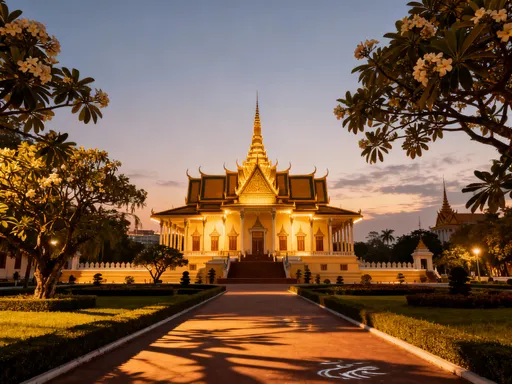
At the heart of Phnom Penh lies the Royal Palace, a complex that has served as the official residence of Cambodia’s king since its construction in 1866. Though the monarchy’s political role has evolved, the palace remains a spiritual and symbolic center of national unity. Located along the banks of the Tonlé Sap River, its grand entrance welcomes visitors into a world of golden spires, intricate carvings, and serene courtyards. More than a royal residence, it is a sacred space where tradition is honored and continuity is celebrated. Every tile, every column, every gateway has been placed with intention, reflecting centuries of Khmer craftsmanship and cultural identity.
One of the most striking features of the palace is its golden roofs, which rise dramatically against the sky. These roofs are not merely decorative; they symbolize divine protection and royal authority. The most iconic structure within the complex is the Moonlight Pavilion, or Preah Tineang Chan Chhaya. Standing tall on a raised platform, this open-air pavilion with its slender spires was historically used for royal ceremonies and public audiences. Its elegant design allows breezes to flow through, offering relief from the tropical heat while maintaining a sense of grandeur. The pavilion is often photographed, but standing beneath it in person evokes a deeper sense of history and presence.
Visiting the Royal Palace is not like touring a museum frozen in time. It is a working royal site, and this reality shapes the visitor experience. Certain areas are closed during royal events, and access may be limited without notice. Dress codes are strictly enforced—shoulders and knees must be covered, a small but meaningful act of respect. These rules are not inconveniences; they are invitations to engage with the site on its own terms. When visitors observe these customs, they become part of a tradition of reverence rather than passive observers. This quiet discipline enhances the sense of awe, turning a simple walk through the grounds into a moment of connection with Cambodia’s living heritage.
Silver Pagoda: A Treasure Within the Palace Walls
Nestled within the eastern side of the Royal Palace grounds, the Silver Pagoda is one of Cambodia’s most revered religious sites. Its name comes from the 5,329 silver tiles that cover the temple floor, each weighing 1.1 kilograms. When sunlight streams through the windows, the floor glimmers like a moonlit pond, creating a serene and almost otherworldly atmosphere. Though called “silver,” the temple’s true treasures are its sacred Buddha images, including a life-sized Maitreya Buddha crafted from solid gold and adorned with over 9,500 diamonds. The largest of these gems, a 25-carat diamond, sits at the statue’s forehead, catching the light with quiet brilliance.
Another revered object housed here is the Emerald Buddha, carved from a single block of jade. Though smaller than the golden Maitreya, it holds deep spiritual significance and is dressed in seasonal robes changed by the king himself. The temple’s interior is richly decorated with murals depicting scenes from the Buddha’s life and the Ramayana epic, painted in vivid colors that have endured for generations. These artworks are not just decorative; they serve as visual teachings, guiding devotees and visitors alike through stories of morality, devotion, and enlightenment.
The Silver Pagoda is not only a place of worship but also a sanctuary of peace. Early mornings are especially quiet, with only the soft chime of bells and the murmured prayers of monks breaking the silence. Tourists often arrive later in the day, but those who come at dawn are rewarded with a rare sense of stillness. The contrast between the temple’s opulence and its tranquil energy is striking. It reminds visitors that true wealth is not measured in gold or gems, but in the depth of faith and the preservation of culture. For families visiting Phnom Penh, this site offers a meaningful opportunity to reflect on values, history, and the quiet strength of spiritual tradition.
Independence Monument: Soaring in Memory
Rising gracefully along Preah Norodom Boulevard, the Independence Monument stands as a powerful tribute to Cambodia’s freedom. Completed in 1962, it was built to commemorate the nation’s independence from French colonial rule in 1953. Designed by the renowned Cambodian architect Vann Molyvann, the monument blends traditional Khmer motifs with modernist architecture, creating a structure that is both rooted in heritage and forward-looking. Its lotus-shaped design is particularly symbolic—each petal representing a principle of national unity, while the flower itself stands for purity, renewal, and spiritual awakening.
Standing at 37 meters tall, the monument is impossible to miss, yet it never feels imposing. Instead, it radiates a sense of calm dignity. The structure is built from reinforced concrete but finished with stucco that mimics traditional stone carving. Intricate patterns spiral upward, guiding the eye toward the sky. At night, soft lighting enhances its elegant form, making it a favorite gathering spot for locals. Families stroll by, children play on the surrounding lawns, and couples sit on benches sharing quiet conversations. The atmosphere is one of peaceful pride—a celebration of freedom not through loud proclamation, but through daily presence.
The Independence Monument is more than a memorial; it is a living part of the city’s social fabric. Unlike monuments in some capitals that feel isolated or formal, this one invites interaction. There are no fences or barriers—just open space and a gentle slope leading up to the base. Visitors can walk around it, touch its surface, or simply sit and reflect. This accessibility reflects a broader truth about Cambodia: its history is not locked away in books or behind glass, but carried in the hearts of its people. For women traveling with family, this site offers a gentle yet powerful lesson in resilience and hope—how a nation can rise, rebuild, and remember without being consumed by the past.
Colonial-Era Architecture Along Sisowath Quay
Along the banks of the Mekong River, the Sisowath Quay stretches like a postcard from another era. Here, French colonial architecture lines the waterfront, with buildings painted in soft yellows and ochres, their arched windows and wrought-iron balconies casting delicate shadows in the morning light. Constructed primarily in the late 19th and early 20th centuries, these structures once housed government offices, banks, and private residences. Today, many have been thoughtfully repurposed into boutique hotels, art galleries, riverside cafes, and cultural spaces—proving that heritage and modernity can coexist in harmony.
Walking along Sisowath Quay at sunrise offers one of the most picturesque experiences in Phnom Penh. The river glistens under the rising sun, boats glide silently downstream, and the scent of fresh bread and coffee drifts from open-air cafes. Elderly residents practice tai chi on the promenade, while cyclists and joggers pass by in quiet rhythm. The colonial buildings, with their wide verandas and high ceilings, were originally designed to cope with the tropical climate, allowing airflow and shade. Today, these same features make them ideal for hospitality and leisure, blending comfort with character.
One of the most beloved spots along the quay is the FCC Phnom Penh—the Foreign Correspondents’ Club—housed in a restored colonial building. Once a hub for journalists during turbulent times, it now serves as a cultural meeting point, offering live music, exhibitions, and riverside dining. Its terrace overlooks the confluence of the Mekong and Tonlé Sap rivers, a site of both geographical and symbolic importance. Other buildings along the stretch have been transformed into design studios and craft shops, where local artisans sell handwoven silks, ceramics, and traditional paintings. These adaptive reuse projects demonstrate a deep respect for the past while supporting contemporary creativity and economic life.
National Museum: Guardian of Khmer Heritage
Situated just north of the Royal Palace, the National Museum of Cambodia is home to the world’s largest collection of Khmer art. Built in the 1920s, the museum’s architecture itself is a masterpiece—a blend of traditional Khmer design and European influences, with tiered roofs, open courtyards, and laterite walls that darken beautifully with age. The building was designed to reflect the temples it honors, creating a sense of continuity between ancient and modern. As visitors walk through its covered walkways, surrounded by lotus ponds and shaded gardens, they enter a space designed for contemplation as much as education.
The museum’s collection spans over two millennia, from prehistoric tools to exquisite stone sculptures from the Angkor period. Among the most celebrated pieces are the serene sandstone statues of Avalokiteshvara and Vishnu, their faces carved with such grace that they seem to breathe. Each artifact tells a story—not only of artistic mastery but of religious devotion, political change, and cultural exchange. The museum also houses inscriptions, ceramics, and wooden carvings that reveal the daily lives of people long gone. For families exploring Phnom Penh, the museum offers a rare chance to connect with Cambodia’s deep historical roots in a respectful, accessible way.
What makes the National Museum especially meaningful is its role as a guardian. During periods of conflict, many artifacts were hidden or smuggled out of the country. In recent decades, efforts have been made to repatriate stolen pieces and restore damaged ones. The museum stands as a symbol of cultural survival—proof that even when a nation suffers loss, its soul can endure. Guides on-site often share personal stories of preservation, adding emotional depth to the experience. The quiet courtyards, the gentle sound of water, the dappled sunlight through the trees—all contribute to an atmosphere of healing and remembrance. It is not a place of sorrow, but of strength.
Modern Landmarks and Urban Identity
As Phnom Penh grows, new landmarks have begun to shape its skyline—carefully, thoughtfully, and with respect for the city’s character. The Vattanac Capital Tower, a sleek 37-story skyscraper near the Independence Monument, is one of the most recognizable modern structures. Its design incorporates traditional Khmer motifs in a contemporary way, with a crown-like top that echoes temple spires. Inside, it houses offices, a luxury hotel, and observation decks offering panoramic views of the city. Though modern, it does not dominate the skyline; instead, it integrates into the urban fabric, respecting sightlines to historic sites.
Another significant development is the Chroy Changvar Satellite City Bridge, which connects the city center to the peninsula across the river. This cable-stayed bridge is both functional and elegant, designed to reduce traffic while enhancing access to green spaces. Its construction followed environmental assessments to minimize impact on the surrounding ecosystem, reflecting a growing awareness of sustainable urban planning. On weekends, locals gather on the nearby riverbanks for picnics, kite flying, and family outings—proof that infrastructure can serve both progress and community life.
What stands out about Phnom Penh’s modernization is its restraint. Unlike some rapidly developing cities that erase the old to make way for the new, Phnom Penh has chosen balance. Skyscrapers are concentrated on the outskirts, preserving the low-rise charm of the historic center. New buildings often incorporate local materials, green spaces, and design elements that echo traditional architecture. This approach reflects a deeper philosophy—one that values growth not at the expense of heritage, but in partnership with it. For women who value stability, family, and continuity, this careful evolution offers reassurance: progress does not require abandoning the past.
Buildings That Breathe History
Phnom Penh’s landmark buildings are far more than photo ops. They are keepers of memory, teachers of patience, and symbols of continuity. To walk among them is to witness how a capital reclaims dignity after hardship. Each structure—from the golden spires of the Royal Palace to the quiet courtyards of the National Museum—carries a story of survival, identity, and hope. They remind us that cities are not just collections of buildings, but living records of human experience. In an age when so much feels fleeting, Phnom Penh stands as a testament to endurance.
The city does not shout its history; it whispers it. In the way sunlight hits a silver tile, in the sound of monks’ footsteps on stone, in the laughter of children beneath the Independence Monument. These moments are not staged; they are lived. And in that living, the past remains present. Visitors leave not just with photographs, but with a deeper understanding of resilience—not as a concept, but as a daily practice.
As cities worldwide chase glass towers and digital innovation, Phnom Penh reminds us that true strength lies in honoring roots while moving forward. Its architecture teaches a quiet lesson: that beauty, meaning, and identity are built not in a day, but across generations. Visit not just to see—but to feel. Let the walls speak. Let the stones tell their stories. And in listening, discover a city that has not just survived, but learned how to thrive with grace.